Moava
Helping families build trust through collaborative allowance management.
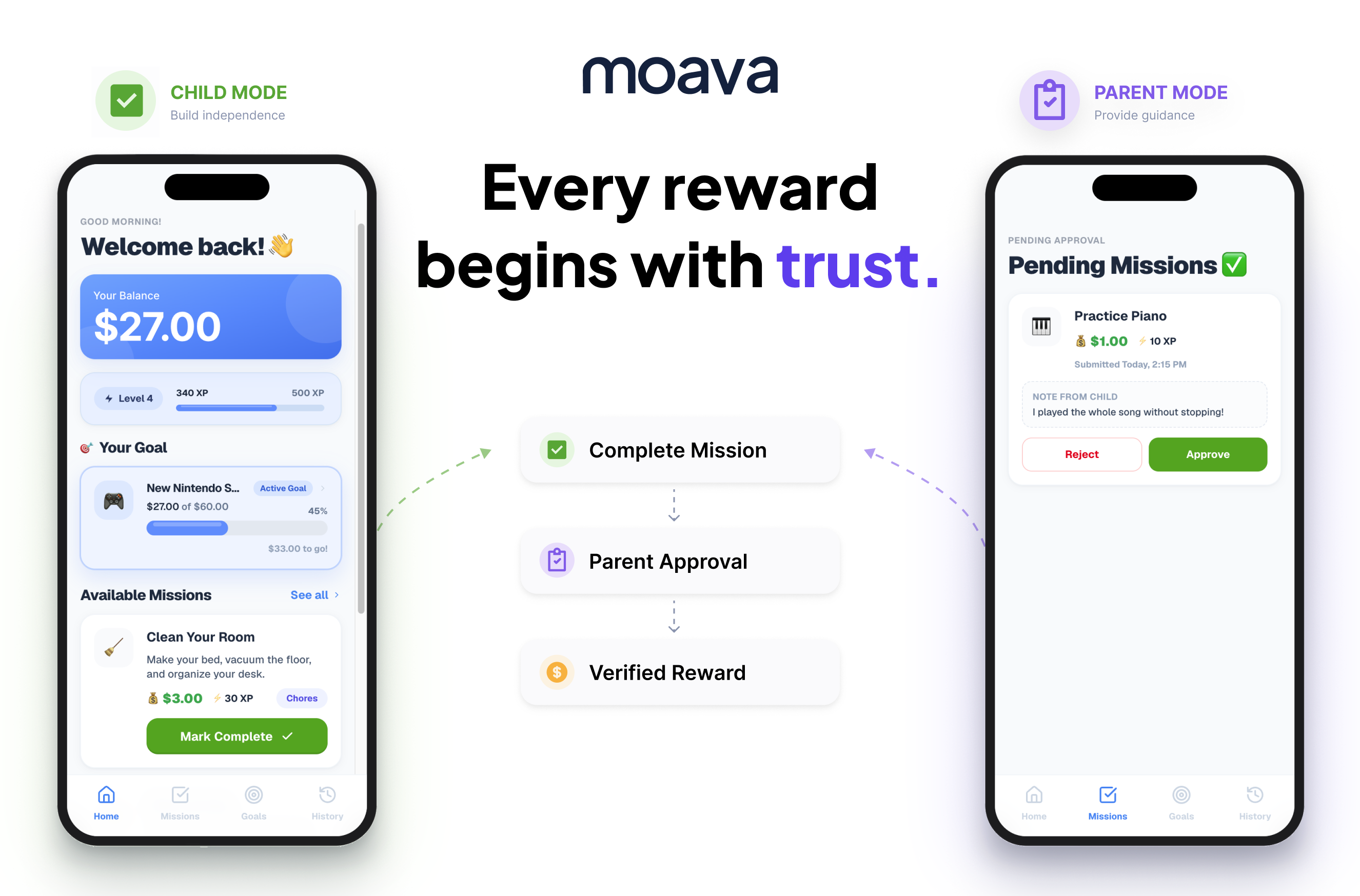
Moava is an AI-assisted product concept that helps parents and children manage allowance through shared goals, verified effort, and collaborative decision-making.
Rather than replacing conversations about money, Moava is designed to encourage them.
My role
Timeline
Status
My Contributions

The Product Question
What does a healthy parent–child financial relationship actually look like?
Most allowance apps help children track money.
Others help parents monitor spending.
But very few products help families make financial decisions together.
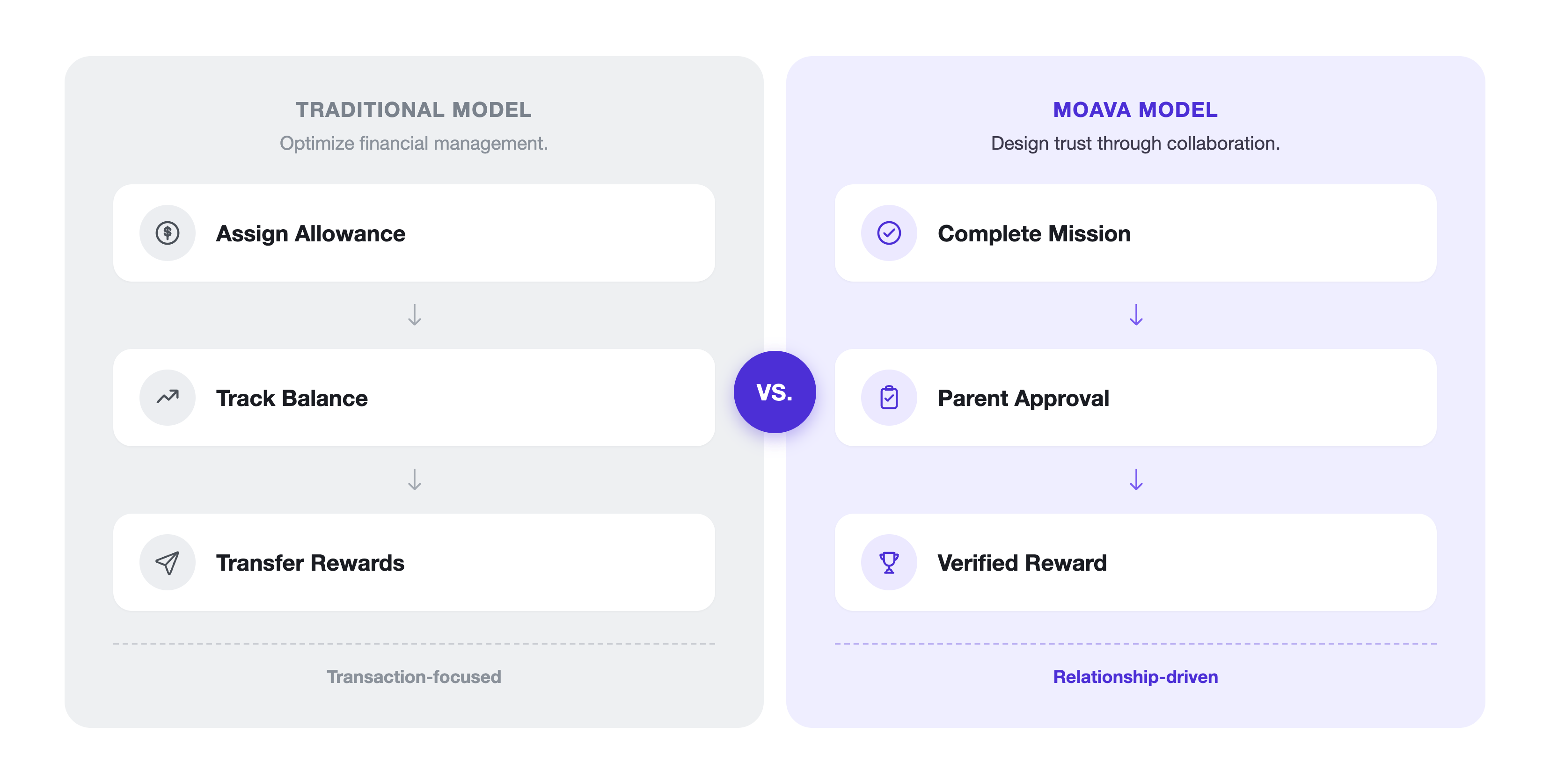
While exploring the space, I realized the real problem wasn't about managing allowance—it was about designing trust between two people with different responsibilities.
That question became the foundation for every product decision that followed.
Product Vision
Product Vision
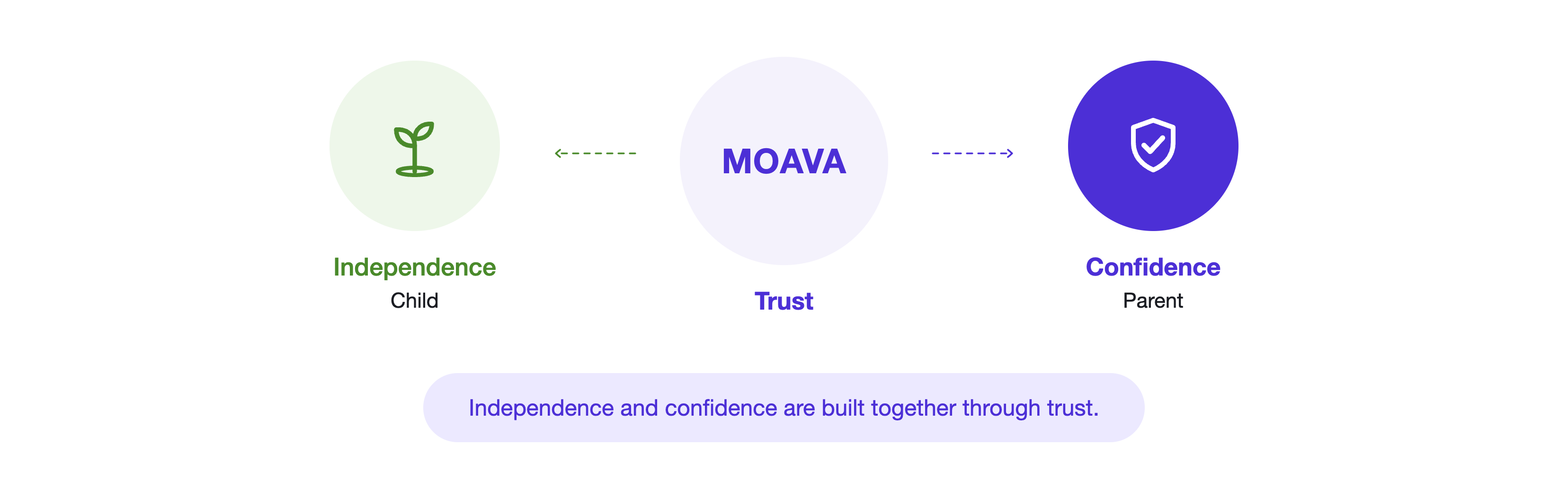
Design an allowance experience where children develop independence while parents maintain confidence.
Rather than optimizing for speed or automation, Moava encourages collaboration through transparent product rules, shared ownership, and intentional decision-making.
Product Principles
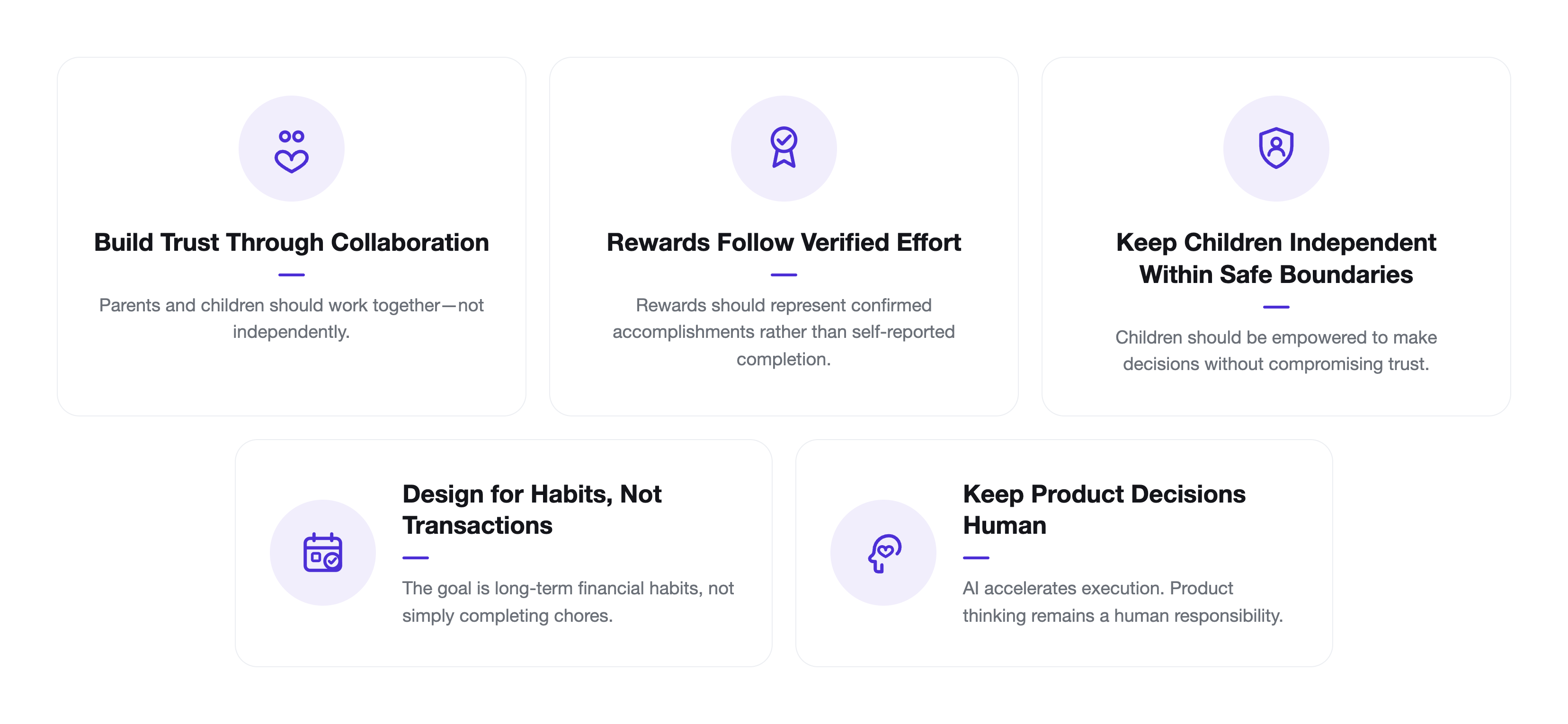
These principles became the criteria behind every product decision that followed.
Establishing the Collaboration Model
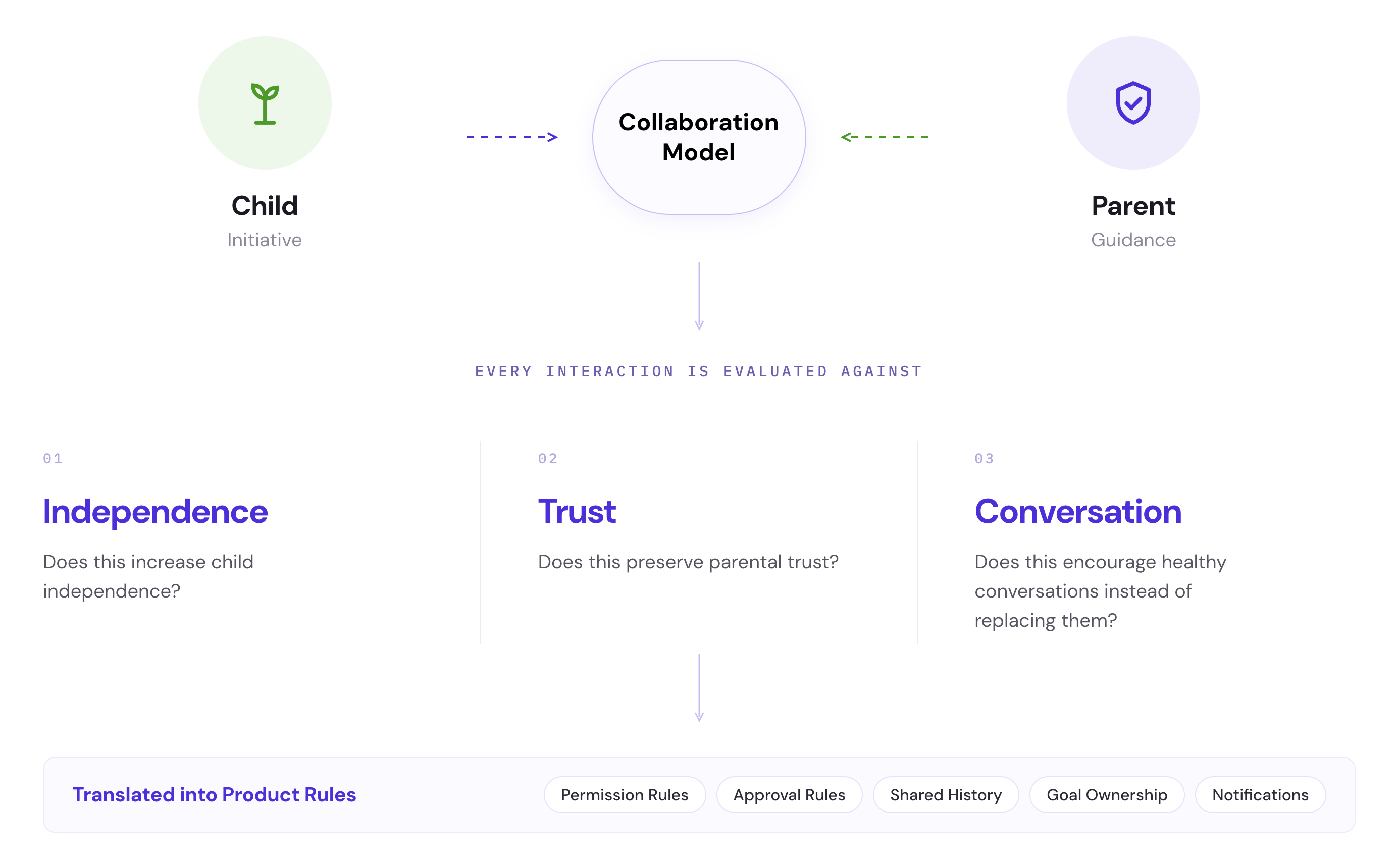
Rather than designing separate parent and child experiences, I focused on defining how they should collaborate.
Every interaction was evaluated against three questions:
• Does this increase child independence?
• Does this preserve parental trust?
• Does this encourage healthy conversations instead of replacing them?
These principles became the foundation for permissions, approvals, notifications, activity history, and goal management throughout the product.
Everything else in the product was built on top of this collaboration model.
Product Decisions That Shaped Moava
Building Moava meant defining the rules behind how parents and children interact—not just designing screens. The decisions below show how I translated the product’s principles into concrete behaviors, boundaries, and shared workflows.
PRODUCT DECISION LOG
I documented decisions as I designed and built. Rather than recording only final solutions, I maintained a working decision log that captured the reasoning, trade-offs, and validation status behind decisions across product rules, permissions, user flows, communication, design systems, and AI workflows.
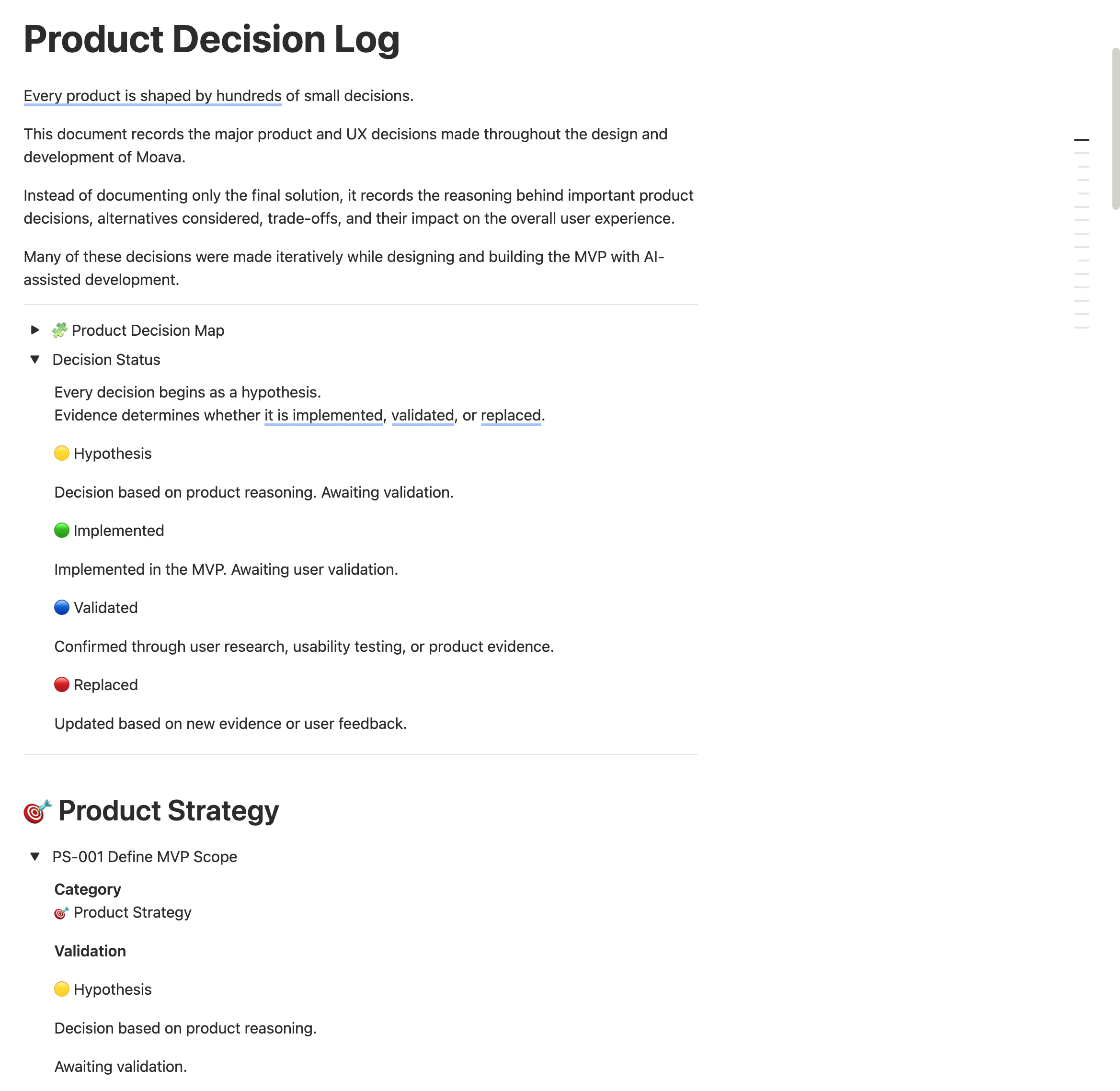
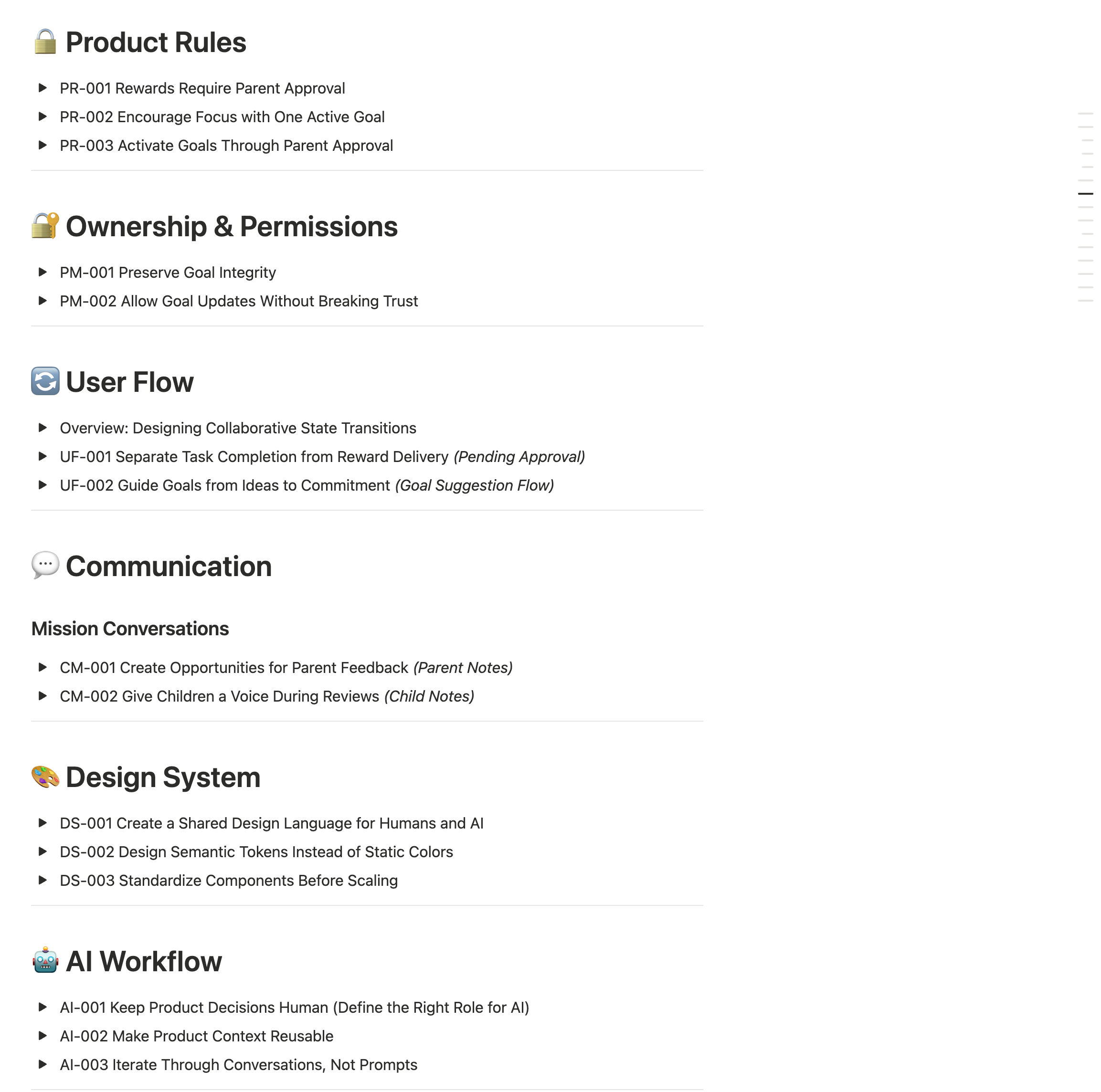
*Screenshots from the product decision log
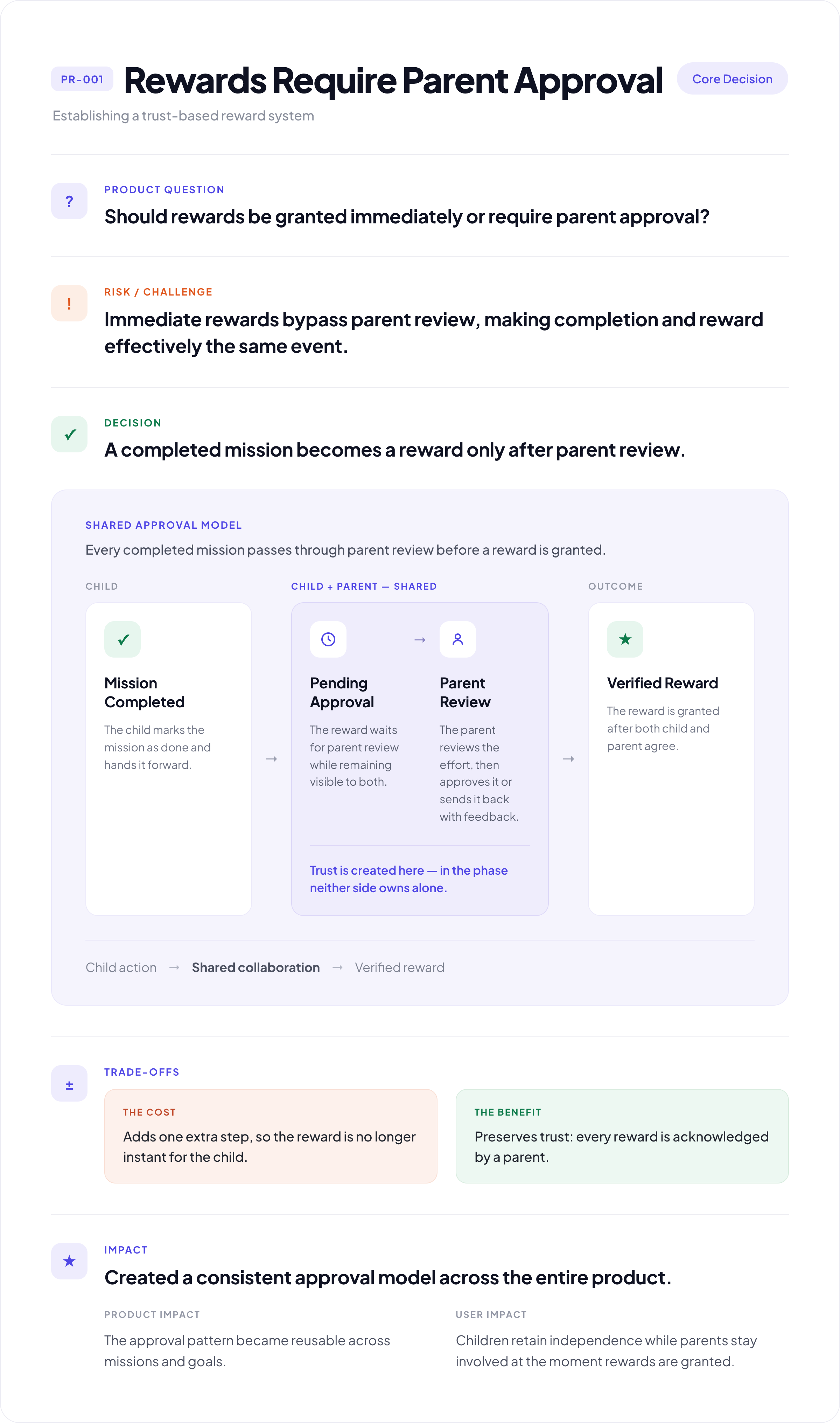
#1. Rewards Require Parent Approval
The first question was when a completed mission should become a reward. Instead of treating self-reported completion as the endpoint, I introduced parent review as the step that turns completed effort into a verified reward.
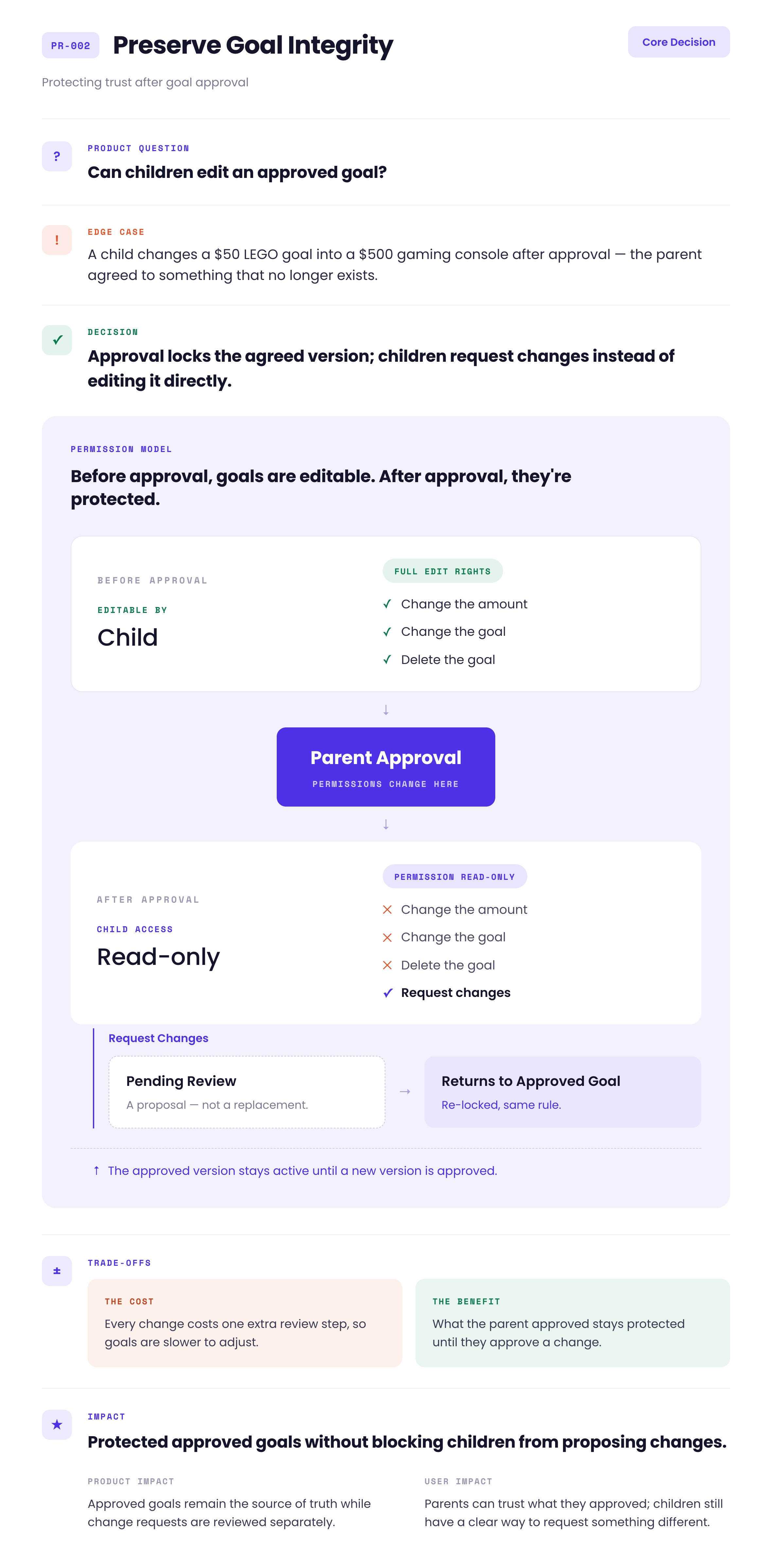
#2. Preserve Goal Integrity
Approval created a different problem: what happens when an approved goal changes? I designed a permission boundary that keeps the approved version intact while giving children a structured way to propose changes.
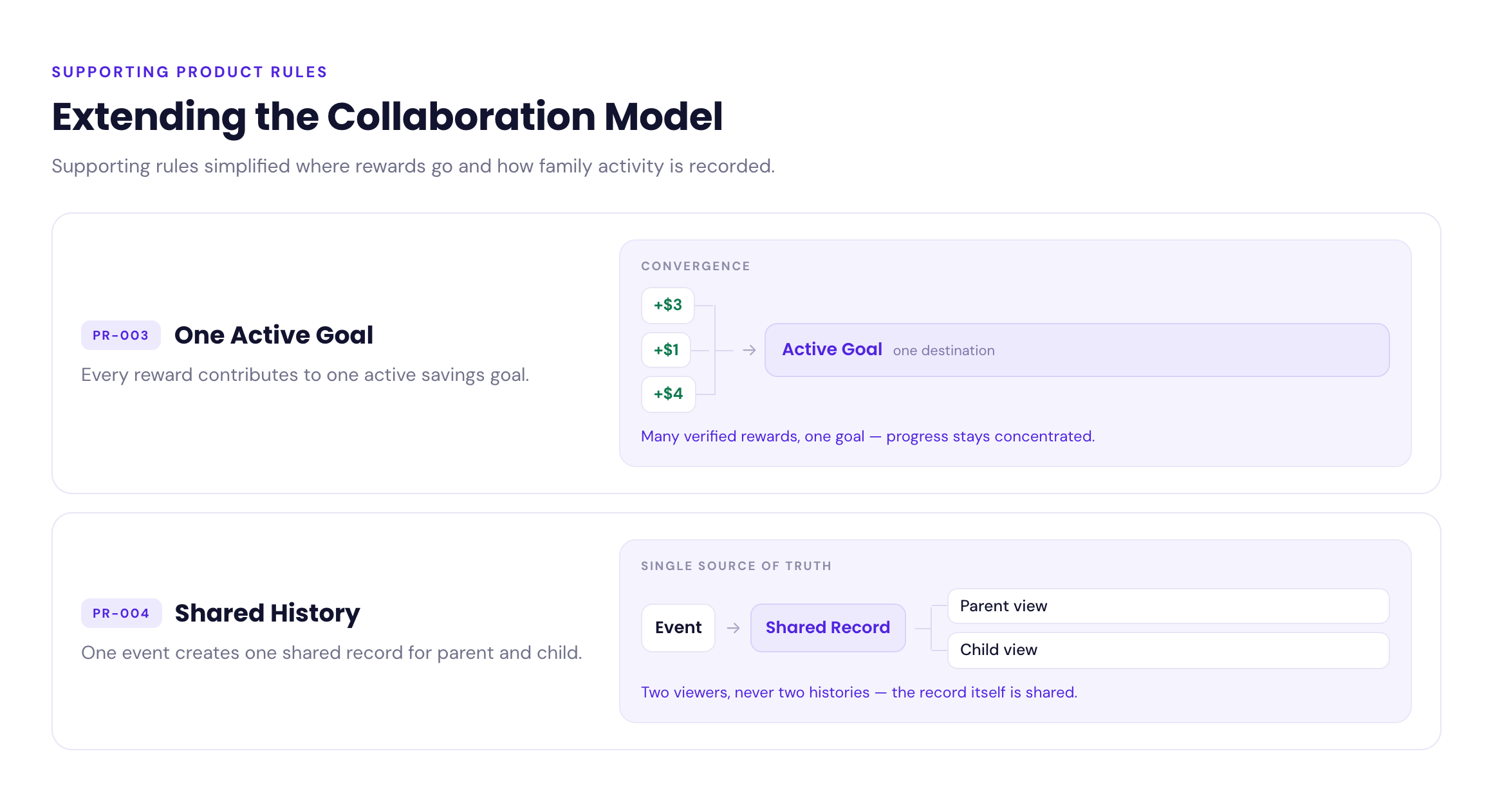
#3-4. Supporting Rules for Focus and Consistency
Two additional rules kept the experience focused and consistent as activity accumulated over time.
design Solution
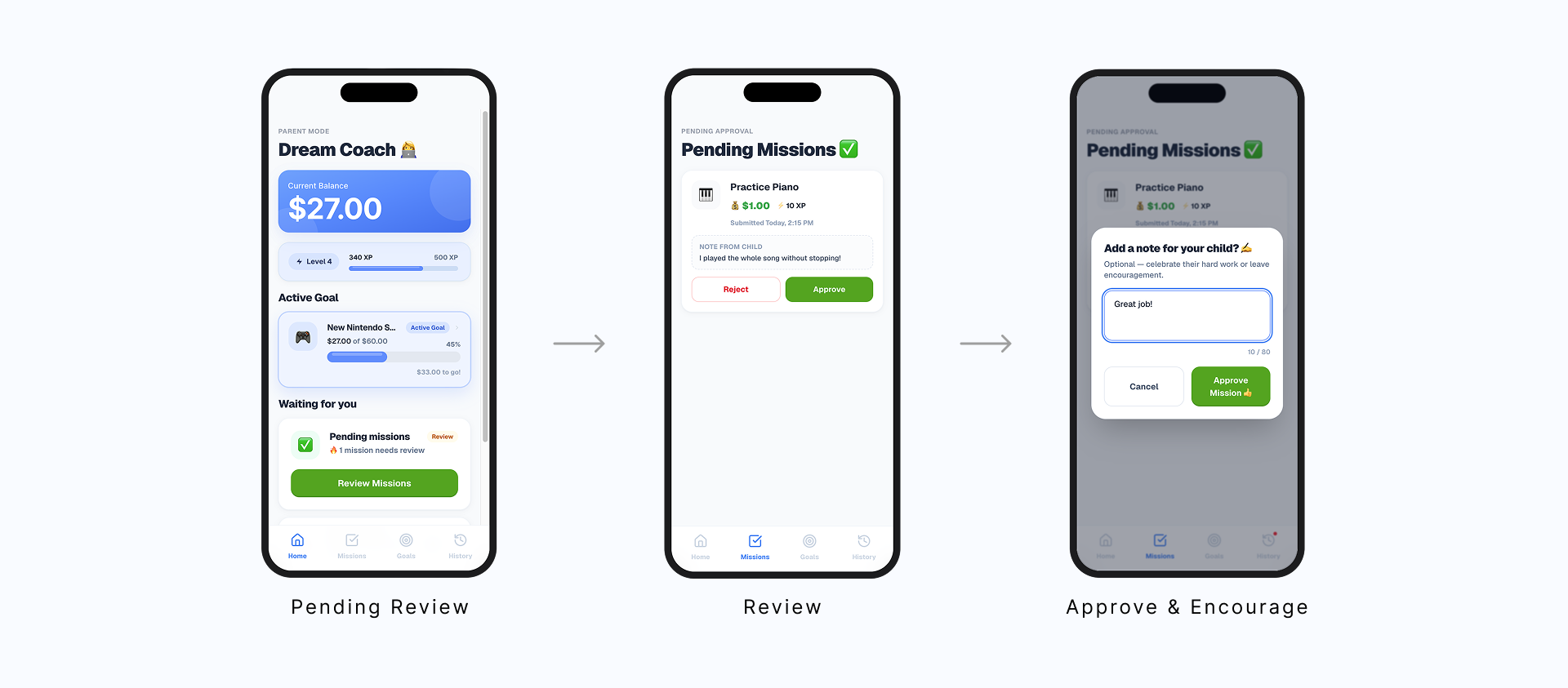
#1. Parent Experience
Helping parents guide rather than monitor.
*Tap to enlarge
Parents are invited into meaningful moments instead of monitoring every step.
#2. Child Experience
Helping children focus on progress, not complexity.
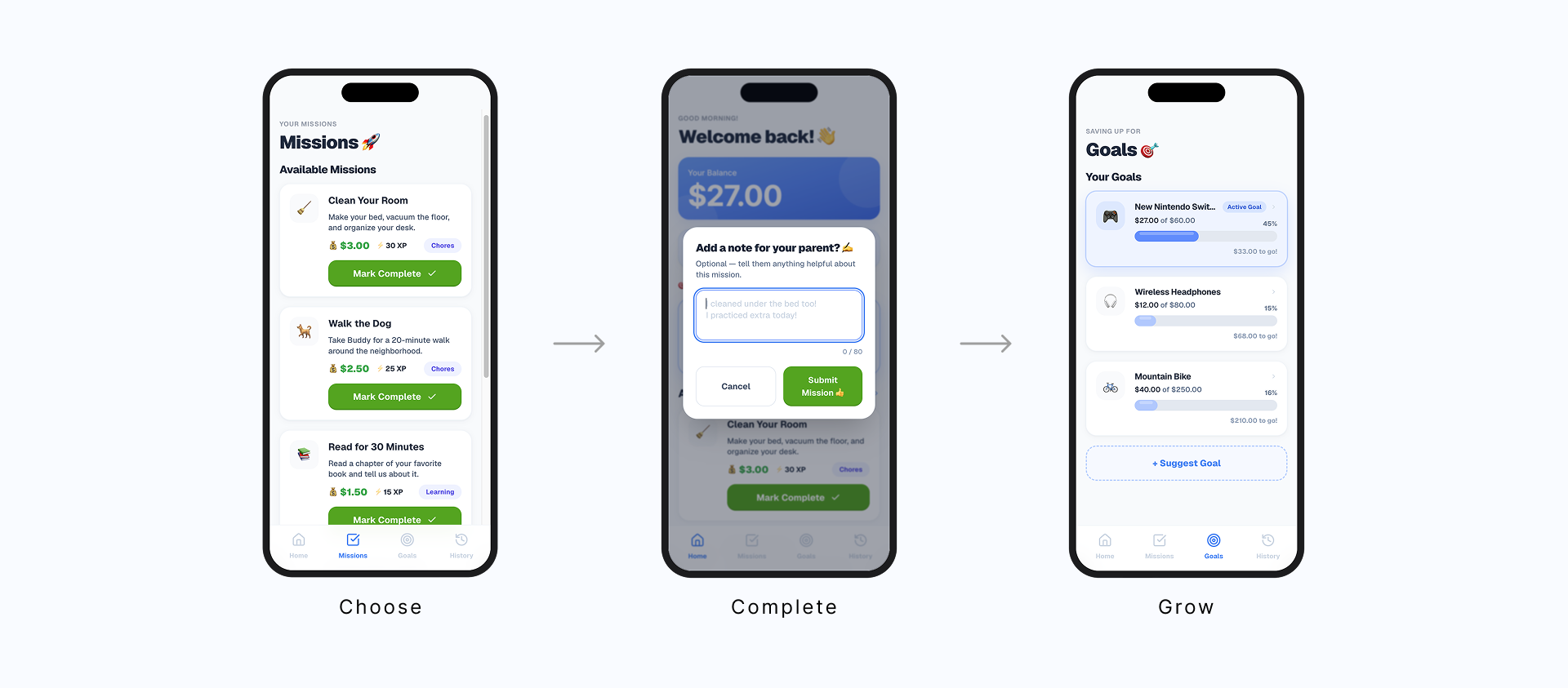
*Tap to enlarge
Every interaction moves the child one step closer to their goal.
#3. Shared Experience
Designing collaboration instead of separate products.
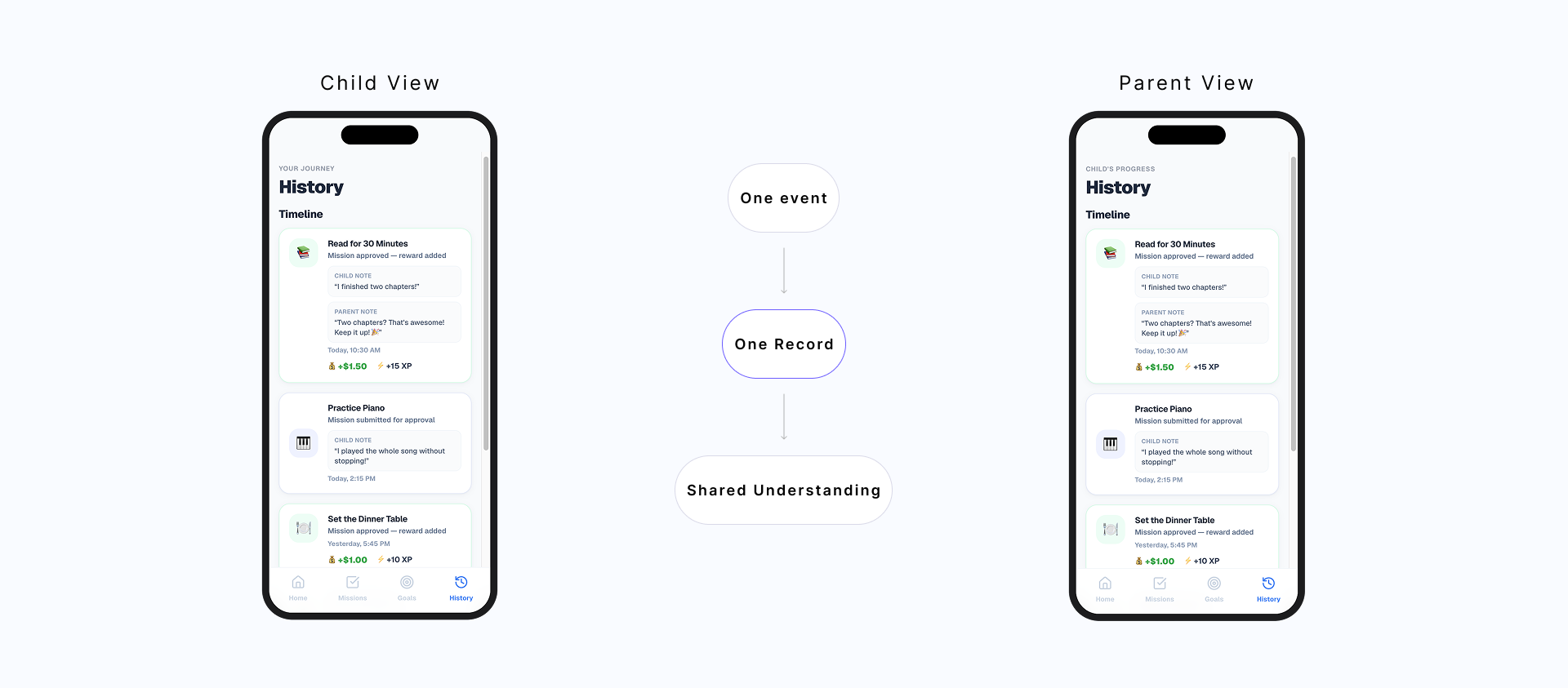
*Tap to enlarge
One shared history keeps collaboration transparent.
#4. Building One Cohesive Product
Creating consistency across every interaction.
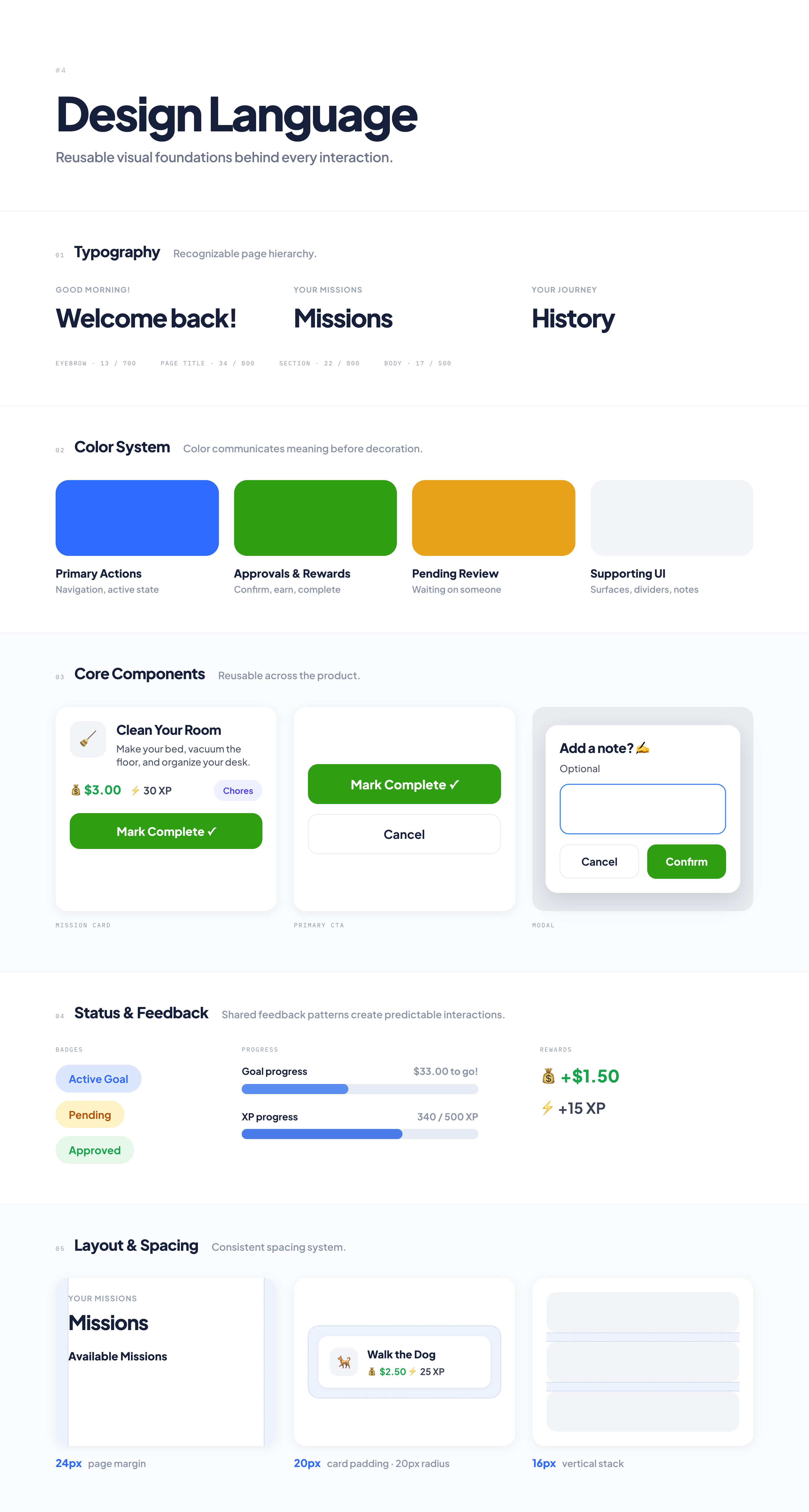
*Tap to enlarge
Shared components helped different user flows feel like one cohesive product.
Build
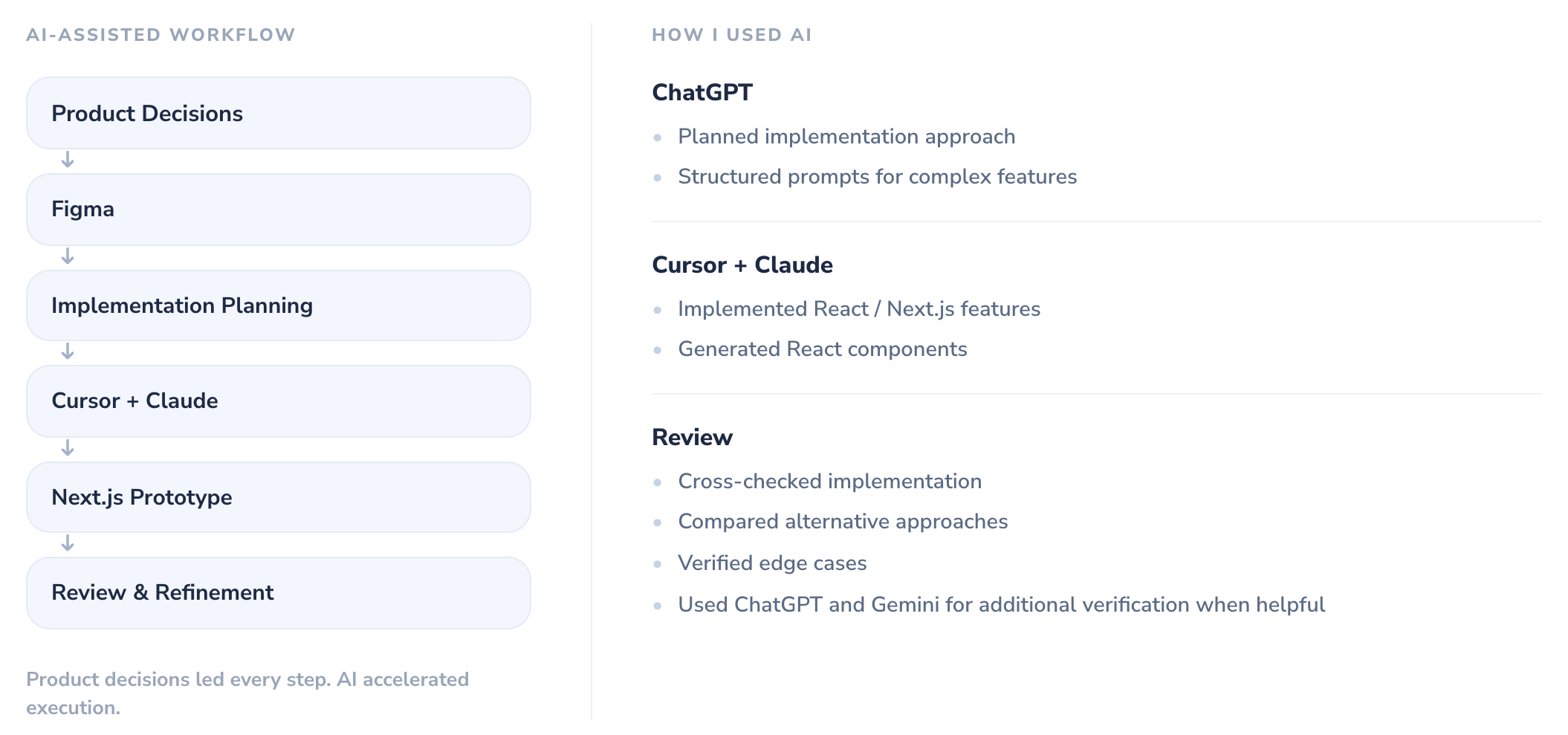
VALIDATION (IN PROGRESS)
Real product decisions deserve real validation.
#1. Planned usability testing
Parents & children
• Observe real parent–child collaboration
• Evaluate approval workflow
• Measure task completion and understanding
#2. Key hypotheses
What I'm validating
• Parent approval builds trust
• One active goal increases motivation
• Shared history improves transparency
• The workflow feels simple for both users
#3. Success Signals
Success looks like
• Parents feel confident approving rewards
• Children complete missions independently
• Both users can complete key tasks without guidance
• Both users understand who owns the next action
*Usability testing is currently being planned.
reflection